US/Mexico Triptych
Sound art with video · 2010–2014 · Dr. George Rivera
The US/Mexico Triptych is a series of three sound art and video works that listen to the border between the United States and Mexico. Using contact microphones, underwater recording, and direct documentation, the works capture the physical and political reality of the border — not as a line on a map, but as a living, contested space of culture, movement, and memory.
Recorded at three distinct sites along the border — the Rio Grande River in Texas, the barrier fence in Nogales, Arizona, and the ocean wall in San Diego, California — each work draws its material from the border itself.
Parting Waters: Rio Grande Sonics
Sound art with video · 2010
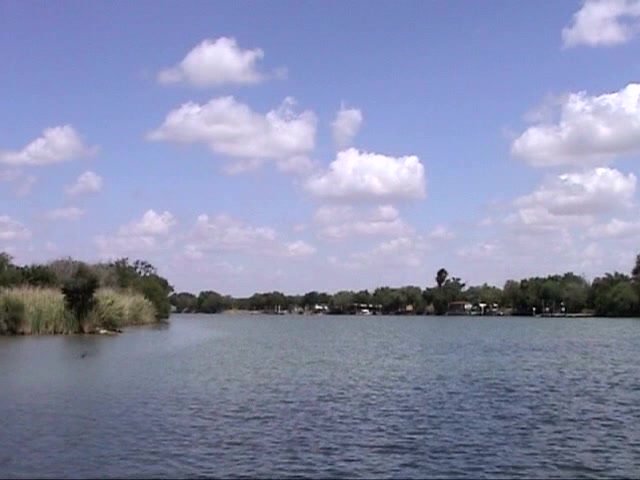
This soundscape captures what is heard beneath the surface of the Rio Grande River in Texas — a river long known as a crossing point for Mexican immigrants entering the United States. The sounds were recorded at specific locations known to be active crossing sites.
The video travels down the river: Mexico on the left bank, the United States on the right. The work asks the listener to inhabit the river — to hear the border from below, where the division between nations dissolves into water and current.

Border Spirits
Sound art with video · 2010
A contact microphone was attached directly to the iron barrier fence between the United States and Mexico in Nogales, Arizona. What one hears are the sounds resonating within the wall itself — the vibrations of the metal, and through it, the sounds of Mexico on the other side.
The video documents the fence as it runs through Nogales, the United States on the left, Mexico on the right. The wall becomes an instrument, and its acoustic interior reveals what its surface conceals.
Mal Aigre
Sound art with video · 2014
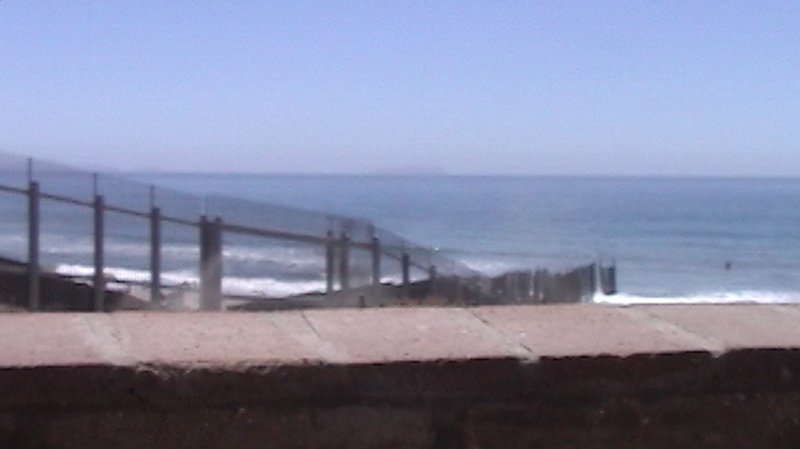
This work focuses on the border wall in San Diego, California, where it extends beyond the land and into the Pacific Ocean. The wall built by the American government — intended to prevent immigrants from Mexico from entering the United States — here meets the sea, its logic unraveling at the water’s edge.
The title, mal aigre — or mal aire, evil air — refers to a Mexican folk illness caused by bad or evil air, curable only by a curandero. The term links the physical barrier to the spiritual and cultural landscape it attempts to divide.